

1. The Doberman was created to protect a tax collector
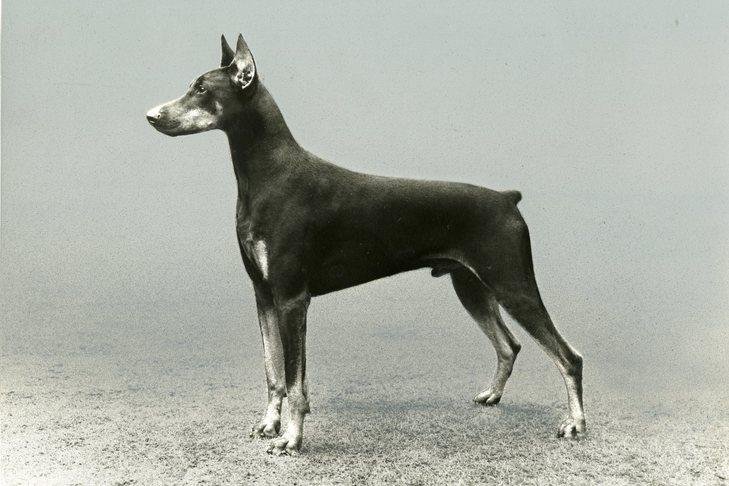
One of the most interesting facts about the Doberman is that the breed was developed in Germany in the late 19th century by a man named Karl Friedrich Louis Doberman.
- Who was he? Doberman worked as a tax collector and also held local duties that sometimes required him to handle money and travel through potentially dangerous areas.
- Why did he create the breed? He wanted a loyal, courageous, intelligent dog that could accompany him and help protect him while he worked.
- How was the breed developed? The exact ancestry is not completely documented, but historical accounts suggest that several breeds contributed to its development, potentially including German Pinchers, Rottweilers, and other working dogs.
- When did it happen? The breed began taking shape around the 1880s, and it was later named after its creator.
Why is this fascinating?
Unlike many breeds originally developed for herding livestock or hunting, the Doberman was deliberately developed with personal protection and working ability in mind. Its combination of alertness, athleticism, and close attachment to its handler helped make it a popular police, military, and protection dog.
Today, the Doberman is also a beloved family companion when properly trained, socialized, and cared for.

2. The Doberman is exceptionally intelligent and learns quickly
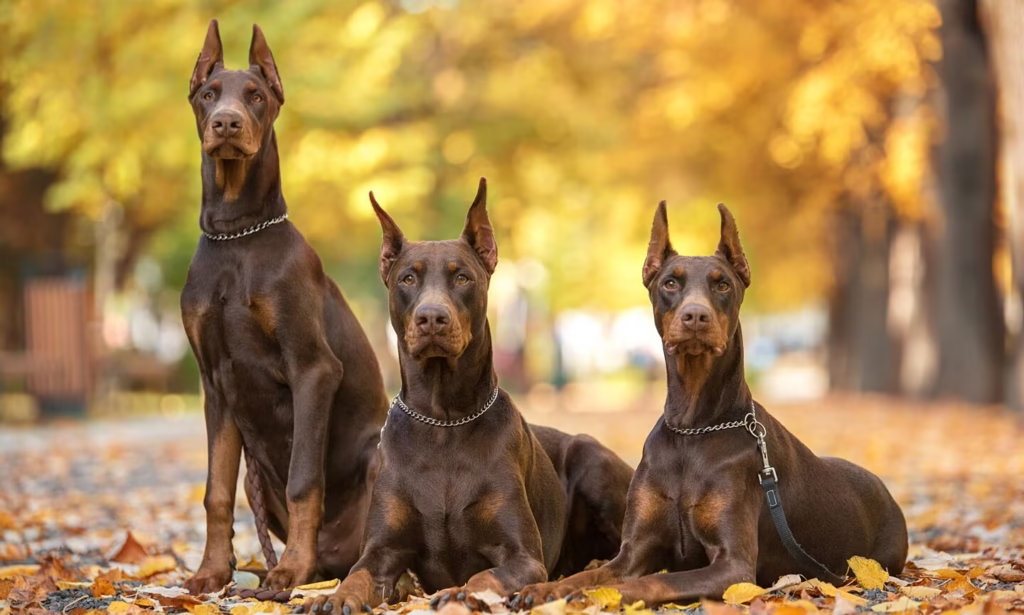
The Doberman is widely regarded as one of the most intelligent dog breeds, especially when it comes to learning commands, working with humans, and solving problems.
What makes its intelligence special?
- Fast learner: Dobermans can learn new commands quickly when training is consistent and rewarding.
- Excellent working ability: They have been used in police work, military service, search tasks, and personal protection.
- Strong problem-solving skills: They often notice patterns in their environment and can learn household routines.
- Sensitive to their owners: They pay close attention to body language, tone of voice, and changes in their handlers’ behavior.
An important detail: Intelligence does not automatically mean obedience. A clever Doberman can also become bored, stubborn, or destructive if it lacks mental stimulation.
To keep one happy, combine short training sessions with games, scent work, puzzle toys, and regular exercise. Positive reinforcement, such as treats and praise, is usually an excellent training approach.
3. Dobermans are often called “velcro dogs”

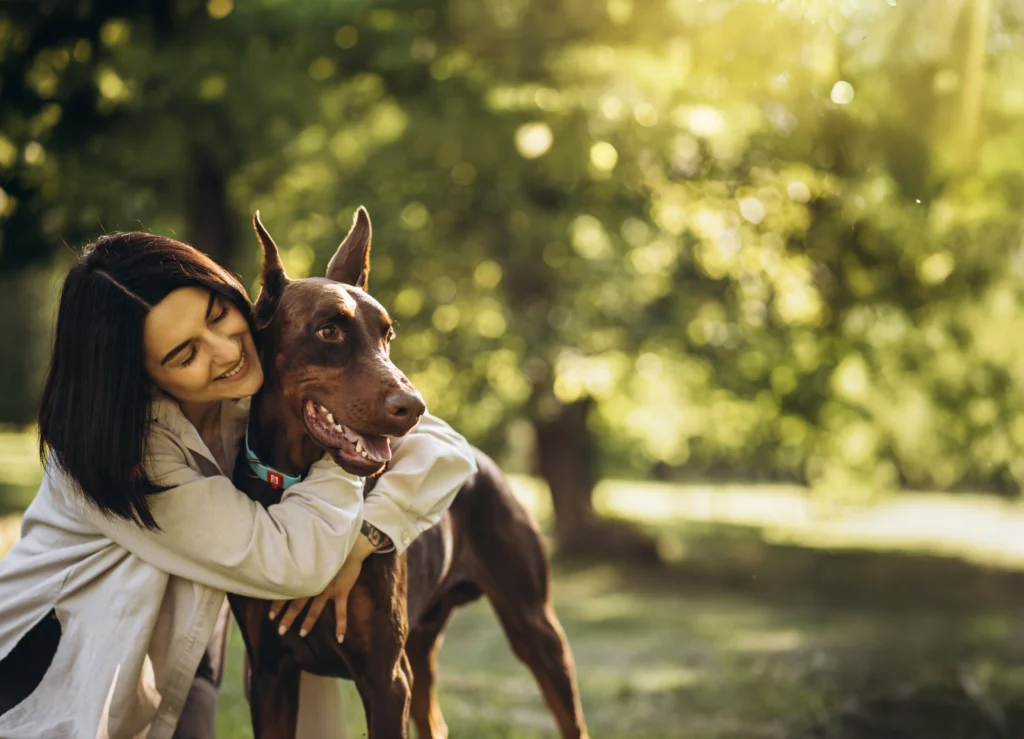
Despite their intimidating appearance, many Dobermans are incredibly affectionate and want to remain close to their favorite people.
The nickname “velcro dog” describes a dog that follows its owner from room to room, stays nearby, and enjoys being involved in everyday activities.
What does this look like in daily life?
- Following you around the house, even when you simply go to another room.
- Resting its head on your lap or leaning against your legs.
- Wanting to participate in family activities rather than being left alone.
- Watching you closely and responding to your movements and emotions.
Dobermans often form strong bonds with their families. With proper socialization, many can be affectionate, playful, and gentle companions.
However, their attachment has another side: some Dobermans are prone to separation-related distress if they have not learned to feel comfortable alone. Gradual independence training from an early age can help.
They also need early socialization so their natural protectiveness does not turn into excessive suspicion or fear around unfamiliar people.
4. They are athletic dogs
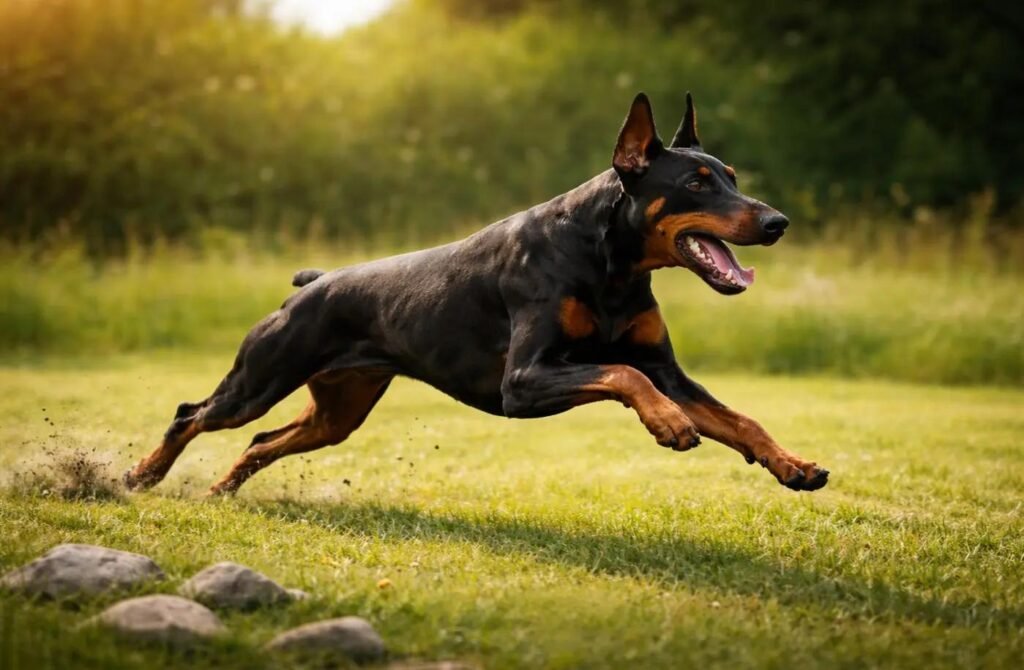
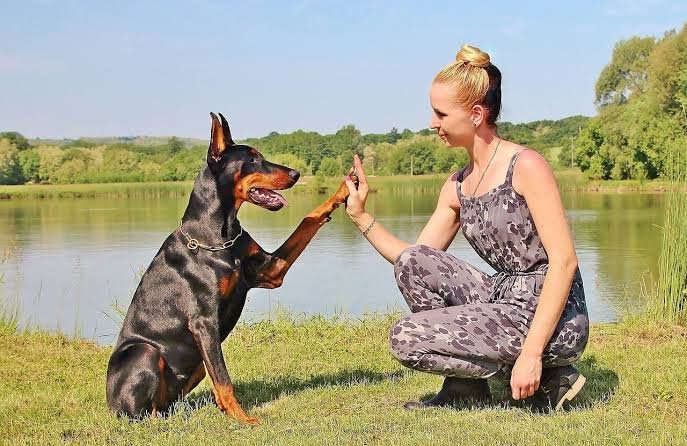
The Doberman has a lean, muscular body built for speed, agility, endurance, and controlled movement.
Why is its physique so impressive?
- Muscular build: Its deep chest, strong legs, and athletic frame support active movement.
- Speed and agility: Dobermans can accelerate quickly and perform well in activities that require coordination.
- High energy levels: Many enjoy long walks, hiking, structured play, and canine sports.
- Working endurance: Their physical abilities and willingness to work make them suitable for activities such as obedience, tracking, and agility.
How much exercise do they need?
Many healthy adult Dobermans need roughly 1–2 hours of combined daily physical activity and mental enrichment, adjusted to their age, health, and individual needs. Puppies should have age-appropriate activity without excessive forced running or repetitive high-impact exercise.
A good daily routine might include:
- A brisk walk or two.
- Training and obedience practice.
- Fetch or other interactive games.
- Scent games and food puzzles.
One important point: Dobermans have short coats and can be sensitive to cold weather. They are not ideally suited to living outdoors in cold conditions and generally thrive as indoor family dogs.
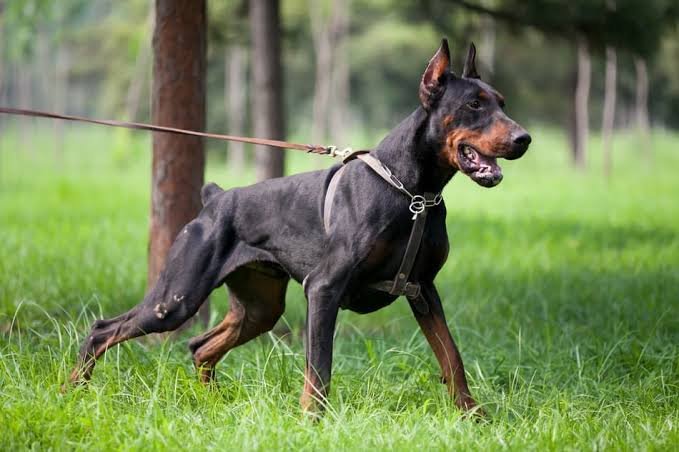
5. Their appearance is distinctive, but some features are misunderstood
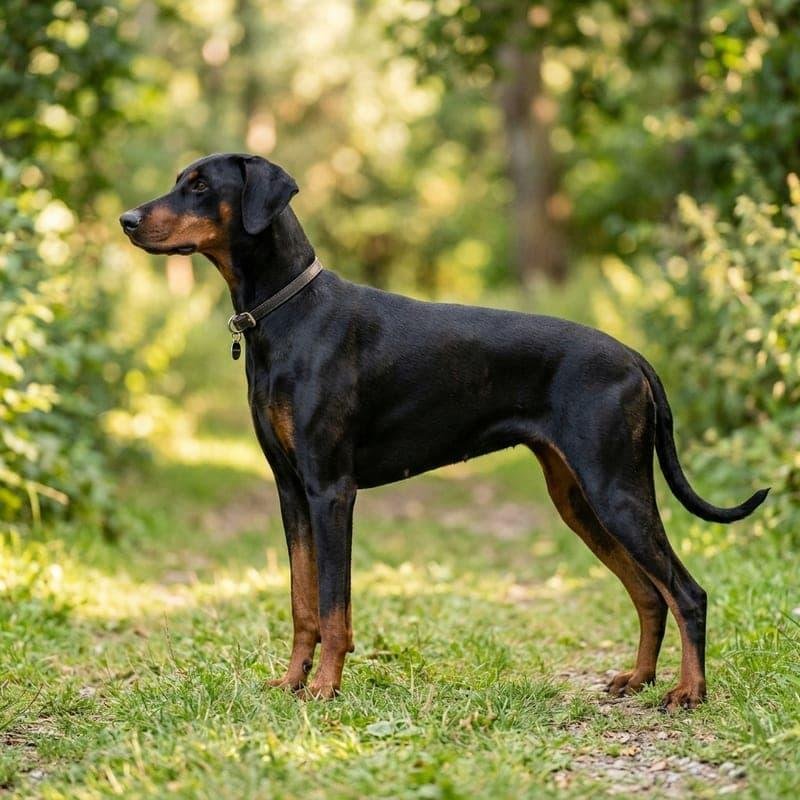
The Doberman’s sleek appearance is famous, but there are some fascinating details behind it.
A. Their ears are naturally floppy.
Many people recognize Dobermans with upright ears. However, Dobermans are naturally born with floppy ears. The upright appearance traditionally comes from ear cropping, a surgical procedure that is restricted or prohibited in some places.
Cropping is not necessary for hearing, health, or a dog’s ability to protect its family. Natural ears are normal for the breed.
B. Their tails are naturally long.
Dobermans are also commonly seen with short tails because of tail docking, a procedure traditionally performed for cosmetic or historical working-dog reasons. Their natural tails are longer.
As with ear cropping, docking is restricted or prohibited in some jurisdictions and is not necessary for an ordinary companion dog.
C. They come in different recognized colors.
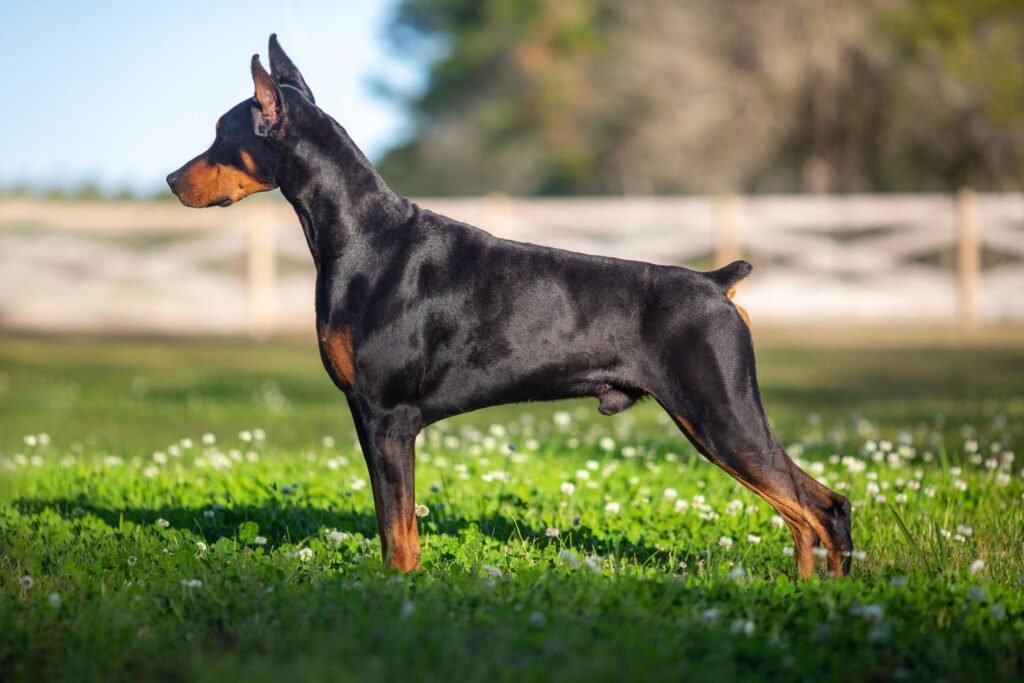
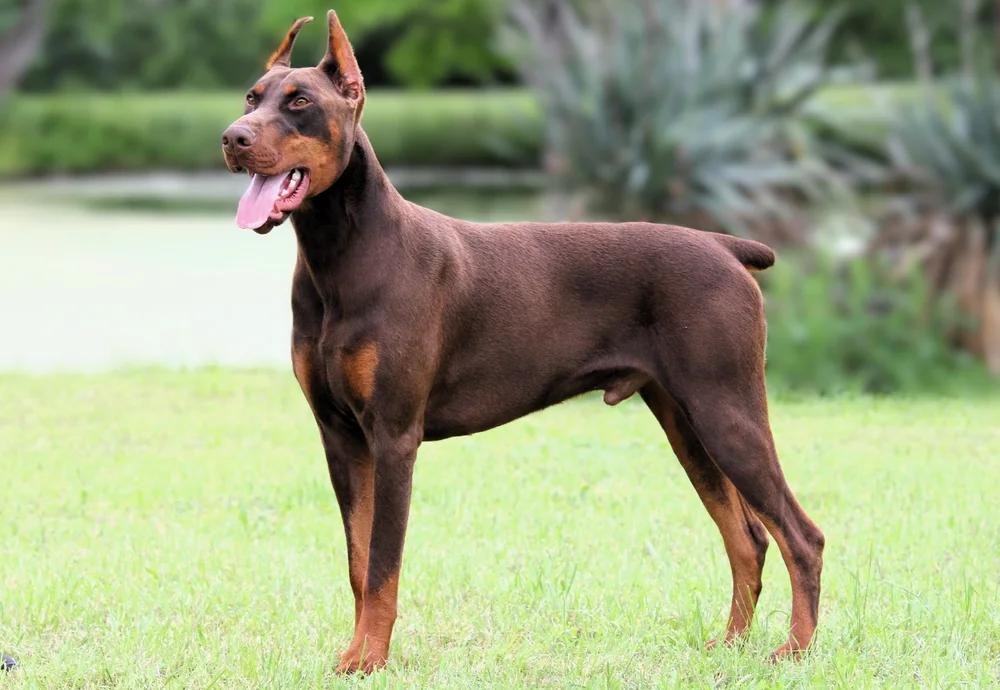
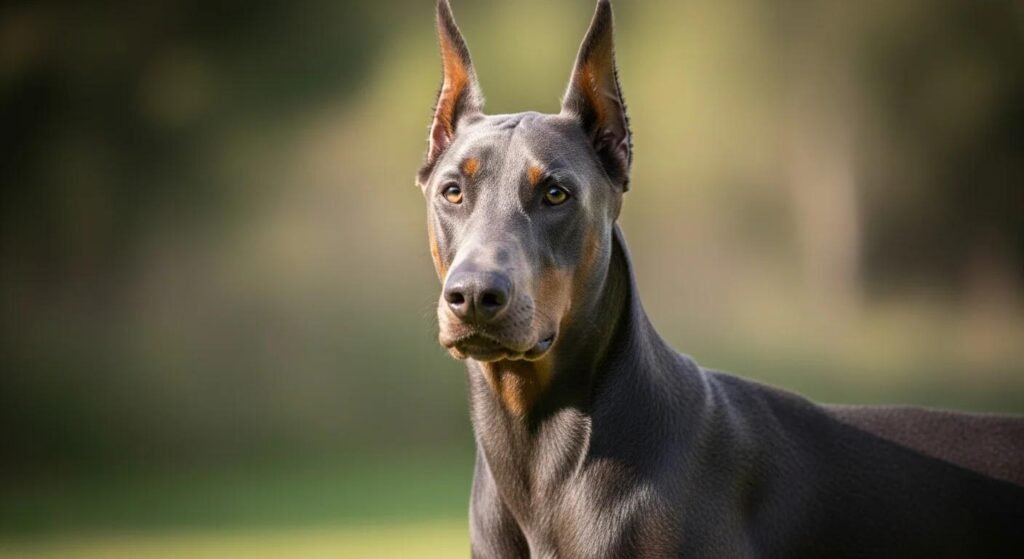
Commonly recognized Doberman colors include:
- Black and rust: The classic, widely recognized appearance.
- Red and rust: A rich brown or reddish coat with rust-colored markings.
- Blue and rust: A diluted black coat that appears grayish or blue.
- Fawn and rust: A diluted red coat that can appear light brown or tan.
Color genetics also matter for health. Blue and fawn Dobermans can be more susceptible to color dilution alopecia, a condition that can cause hair thinning and skin problems.
Bonus fact: Dobermans have important inherited health risks
Dobermans are particularly known for their risk of dilated cardiomyopathy (DCM), a serious heart disease that can lead to heart failure or sudden death. The condition may develop without obvious early symptoms.
Responsible owners should discuss breed-appropriate heart screening with a veterinarian, including echo cardiograms and ambulatory ECG monitoring when recommended. Responsible breeders should also screen breeding dogs for relevant inherited health problems.
The typical lifespan is approximately 10–12 years, although individual dogs can live shorter or longer lives depending on genetics, healthcare, and other factors.
Quick summary: What makes a Doberman special?
| Characteristic | What it means |
|---|---|
| Origin | Developed in Germany for personal protection and working ability |
| Intelligence | Quick to learn and responsive to training |
| Personality | Often affectionate, loyal, and people-oriented |
| Activity level | Athletic and energetic; needs daily exercise |
| Appearance | Naturally floppy ears, a long tail, and several recognized coat colors |
| Best environment | An engaged household that provides companionship, training, and activity |
| Main health concern | Increased risk of dilated cardiomyopathy |
Is a Doberman a good family dog?
Yes, a Doberman can be an excellent family dog, including in a household with children, when it has a suitable temperament, careful socialization, and consistent training. As with any large, powerful breed, interactions with young children should always be supervised.
It is generally best suited to people who can provide daily exercise, mental challenges, companionship, and responsible veterinary care. It may be less suitable for someone who is away from home for long periods and has little time for training or activity.
My final thought: The most surprising thing about the Doberman is the contrast between its powerful appearance and its affectionate nature. Behind that athletic body is often a sensitive, intelligent dog that wants to work with its family and be part of everyday life. 🐾

Leave a Reply